
Switchgrass is a hardy native ornamental that brings structure, texture, and year-round interest to landscapes. But knowing when—and how—to prune it is key to keeping it looking its best. In this short video, our team explains how we manage Switchgrass as part of our seasonal landscape maintenance program.
In this video, you’ll learn:
- The ideal time of year to cut back Switchgrass
- Why proper timing supports regrowth and appearance
- How we handle pruning across commercial and residential landscapes
Whether you’re maintaining large community plantings or a single backyard bed, these quick tips will help your Switchgrass stay healthy and strong all season long.
Watch the video or read the transcript, below.
Transcript
Hey everybody, I’m Jason Smith. I’m with Bland Landscaping, and today we’re going to talk about general practices for common ornamental grasses you may see in your landscape. The example we have here today is switchgrass.
Switchgrass very common for us in North Carolina. We see it most often in mass plantings and not as a single plant, so they do look good in masses. During the season, this is kind of what they look like.
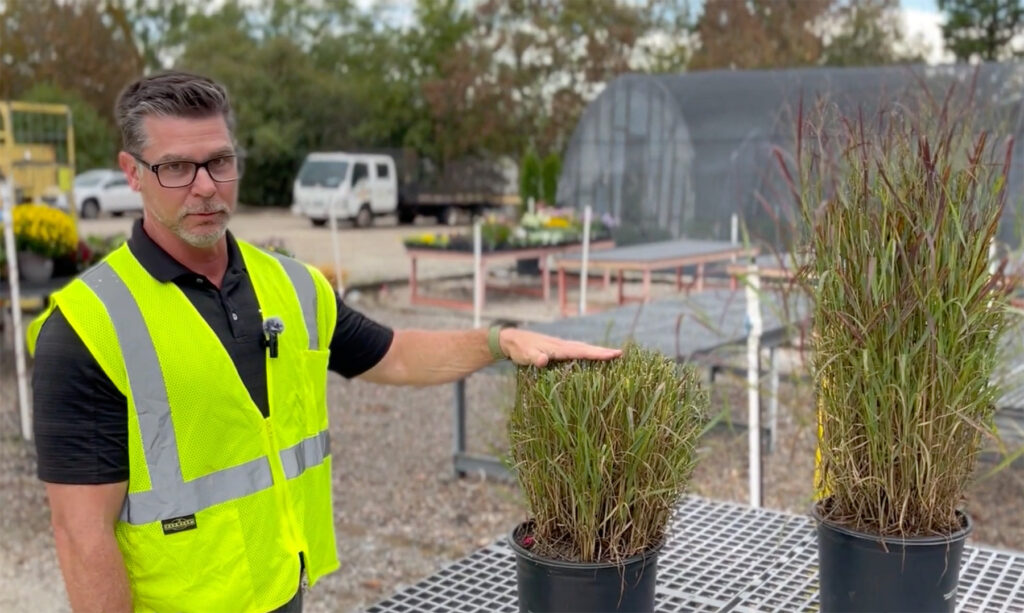
We don’t prune them in season. We let them be through the spring, summer, fall and into the winter. If they weren’t so messy in the winter, we may not prune them at all. But they will go dormant, and you’ll have pieces of material that starts falling off and blowing away, and the seed heads will kind of trail off and blow away. An HOA community or office complex will want things to be neat and tidy, so we will do some winter pruning on them. Typically, pruning will happen in the January and February time frame.
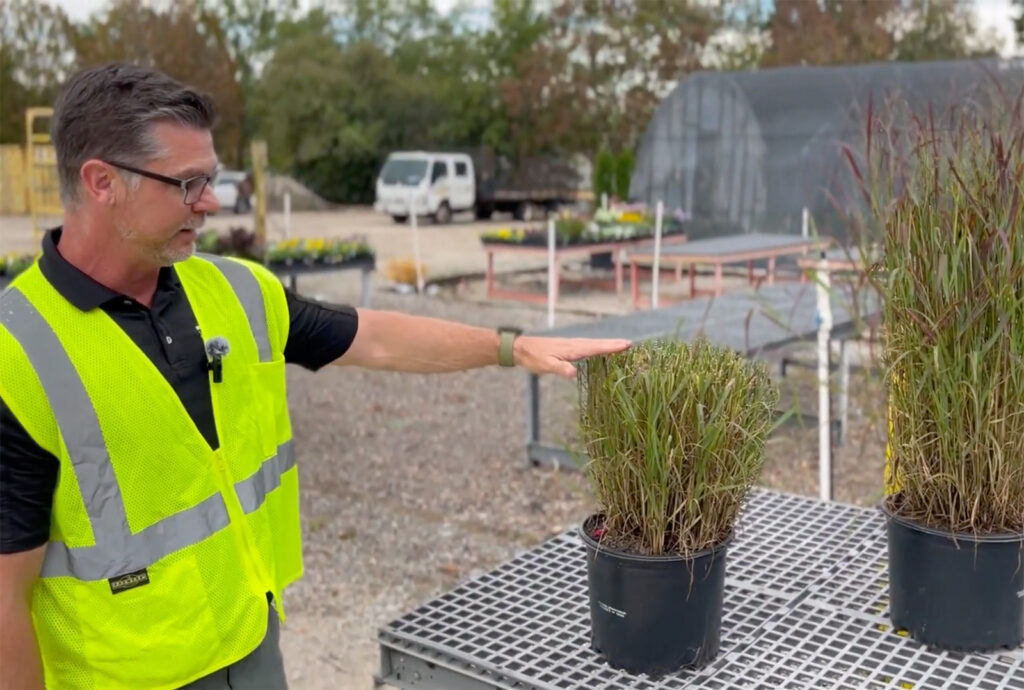
I’ve got an example of one that we have pruned. For time purposes, we went ahead and did this for you, so this is what one would look like. Our general rule of thumb for height—no matter how big or tall the grass is—or if we have something really tall—we wouldn’t cut it this far back. But something in the five foot range, we would get down to maybe knee to thigh height to try and leave from protection for the crown. The crown of the plant is down here at the bottom, and we do try to protect it from ice or snow or just cold weather in the winter. We don’t want to go all the way to the crown, which could damage the plant and make it not come back next year.
So, you may see us in your neighborhood or community in the winter (likely that January and February time frame) pruning grasses that are similar to this. If they’re in that knee-to-thigh height range, that’s what you can expect. And just remember that during the season, we really don’t do anything else.