
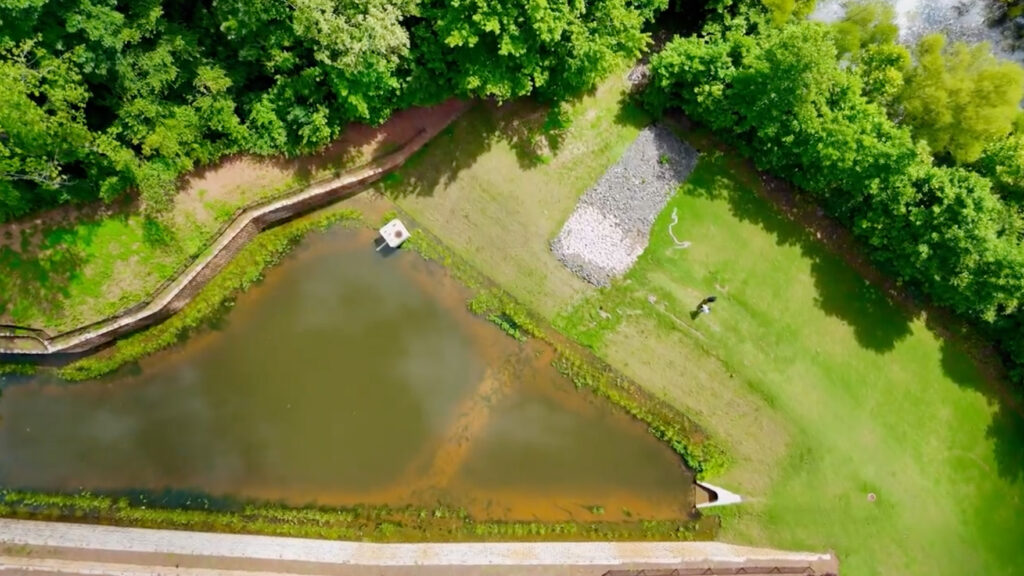
As a Property Manager, HOA Board Member or just an interested resident, do you sometimes have trouble remembering which stormwater control device is which? David, Mitchell, and Brandon of our Foster Lake & Pond Management team are here to make things easier: We’re breaking down the four main stormwater device types you’ll encounter so you can continue managing your community with confidence.
Shoutout to Community Associations Institute North Carolina for hosting the Smarter in 5 Minutes video series!
Check out the video and transcript below.
Video Transcript
We’re Foster Lake and Pond Management and we’re here to make you smarter in five minutes. Hey, I’m David Hargrove, the Eastern Branch Manager for Foster Lake and Pond Management. Today we’re going to give a quick overview of SCMs (stormwater control measures) and a few of the different SCM types.
First, there are two main functions of SCMs: Water quality and water quantity. For water quantity, we’re really talking about flood control. So, when we get large rain events, SCMs accommodate a large amount influx of stormwater over a short period of time. That water is held, stored in the SCM over a duration that’s maybe sometimes three days, four days. Over that period of time, that is where the water quality comes into play. That period of time allows for things like suspended sediment, nutrients, and pollutants to be absorbed by the SEM and broken down or or settled.
Today we’re going to cover four different kinds of SCMs: Wet ponds, dry ponds, wetlands, and bioretentions.
Wet ponds and dry ponds are very similar in that wet ponds retain water, while dry ponds completely de-water between rain events. The main difference between wet ponds and dry ponds is the elevation of the orifice on the riser. Dry ponds, the orifice is going to be at the bottom of the riser so the system can dewater completely, whereas the orifice is at a higher elevation on the wet pond to set the mean water level.
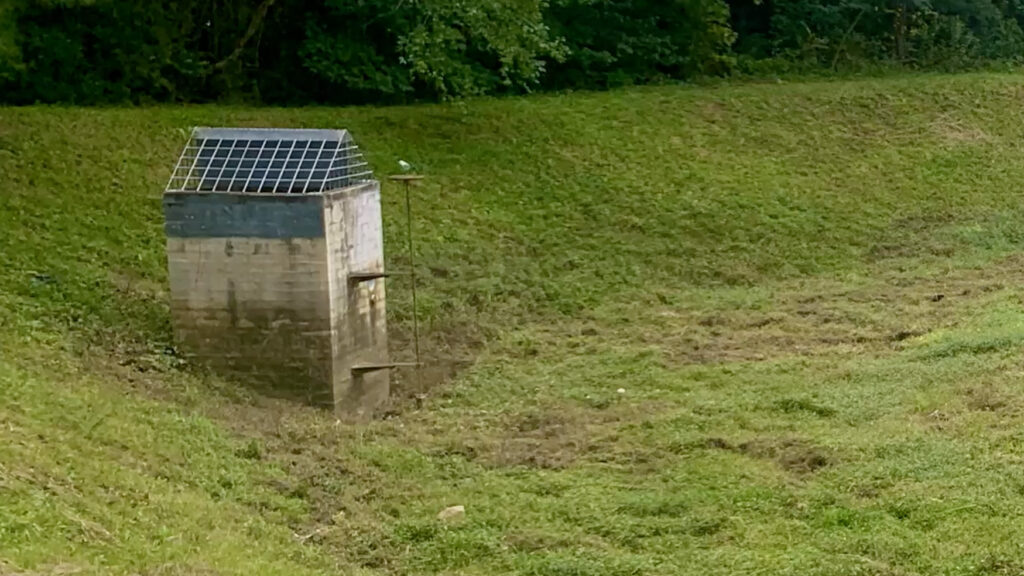
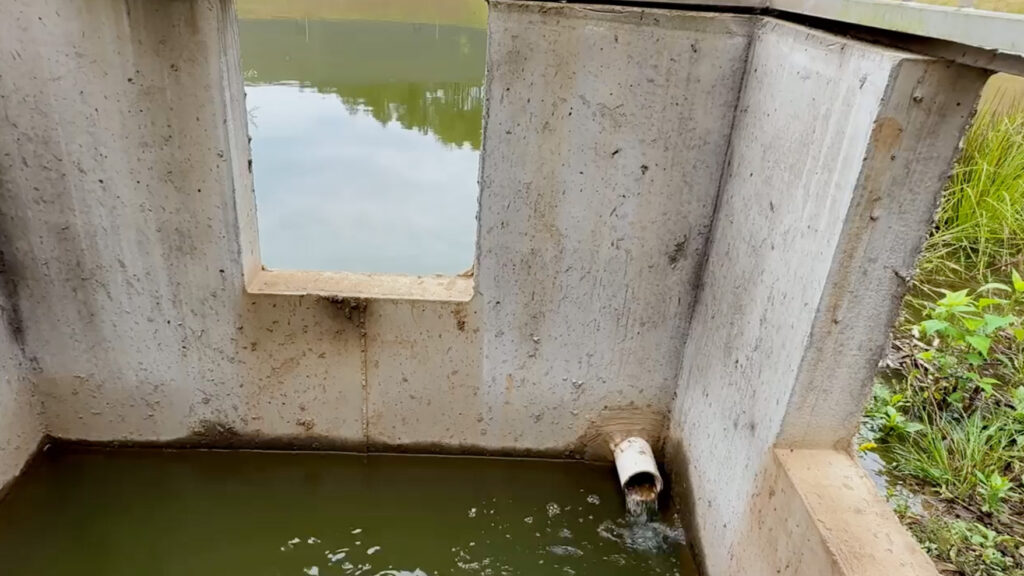
Above, views of stormwater control measures for dry ponds (left) and wet ponds (right).
Next, we have bioretentions, another type of SCM. Bioretentions are either a mulched bed or a sodded basin with a media underneath that allows the stormwater filter through to the outlet system of the pond. These devices can be easily identified by the PVC cleanouts in the bottom of the bioretention.
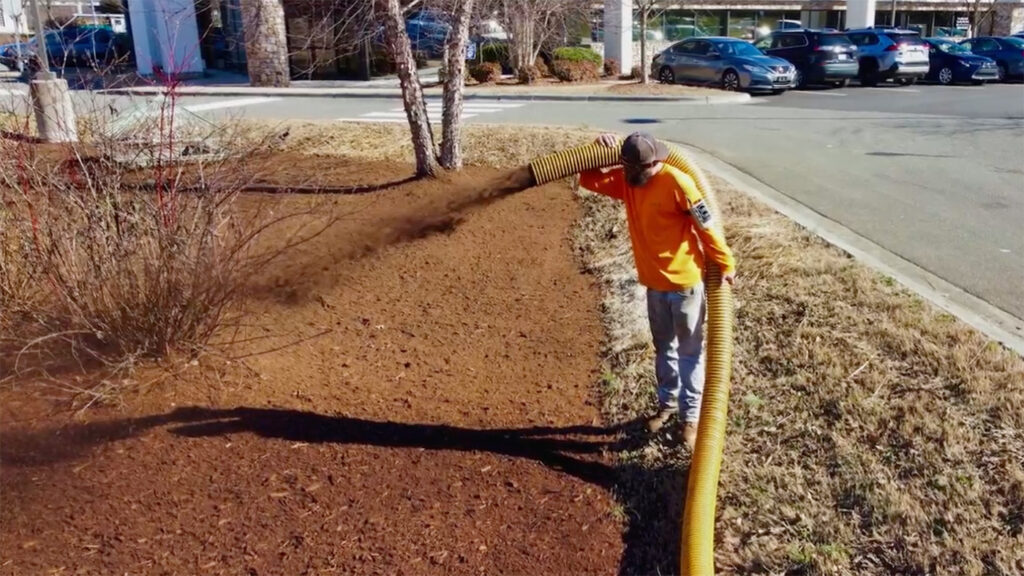
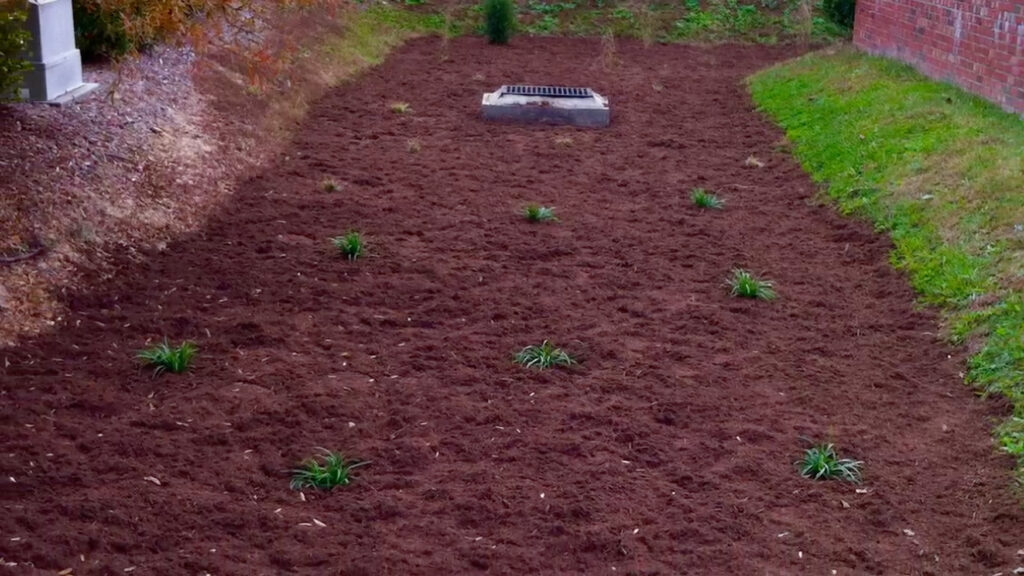
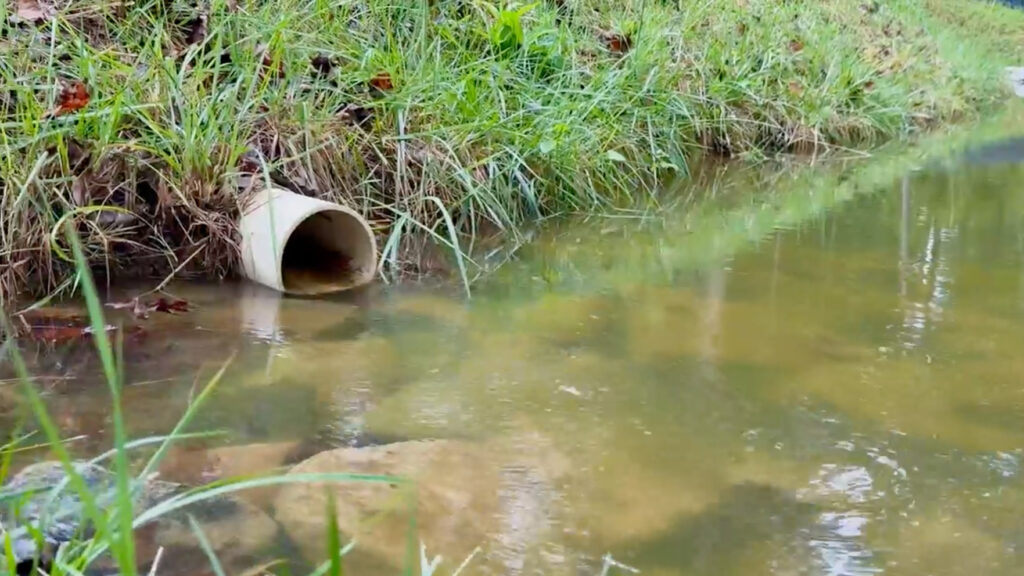
Above, views of bioretentions with a mulched bed (left), and sodded basin with device (middle) leading to outlet system (right).
Our final stormwater device is a constructed wetland. It is what it sounds like: It is a wetland and it looks just like natural wetlands.
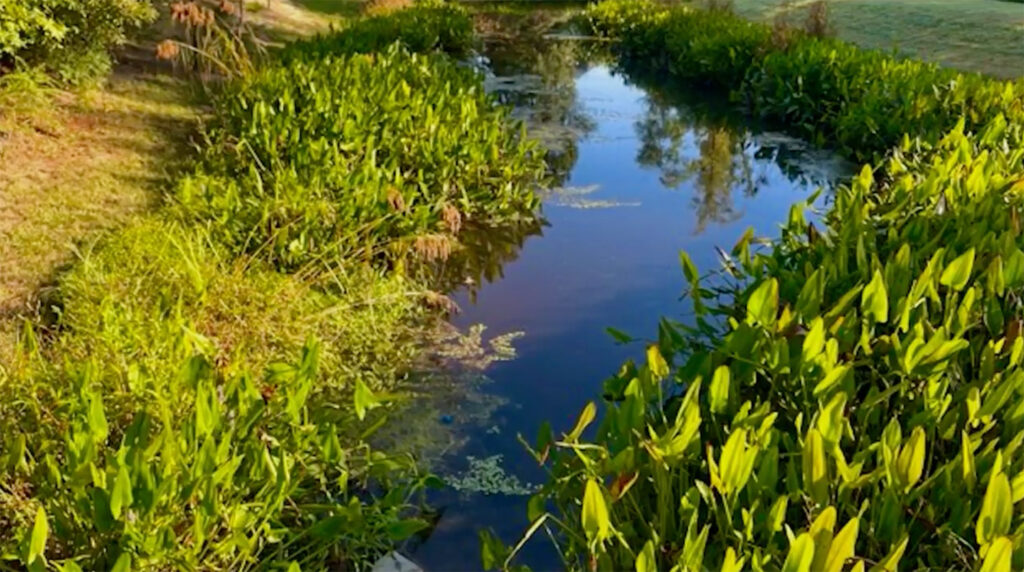
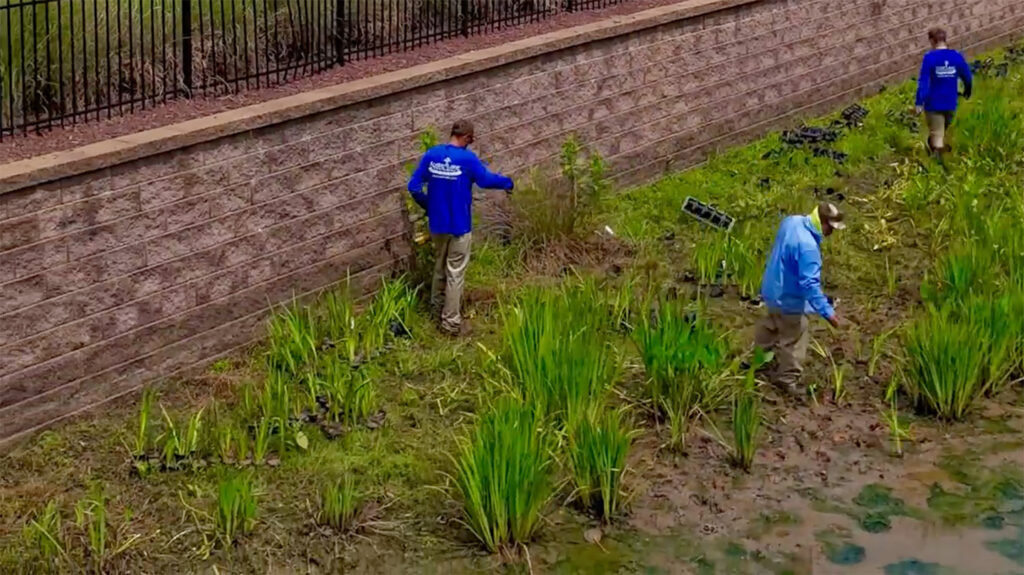
Above, a wetland and aquatic vegetation installations.
These are often more shallow than a wet pond and are usually flush with aquatic vegetation. The aquatic vegetation allows for more absorption of nutrients such as nitrogen and phosphorus. It is important to hire a qualified stormwater professional to maintain your SEM so that they function as designed.