
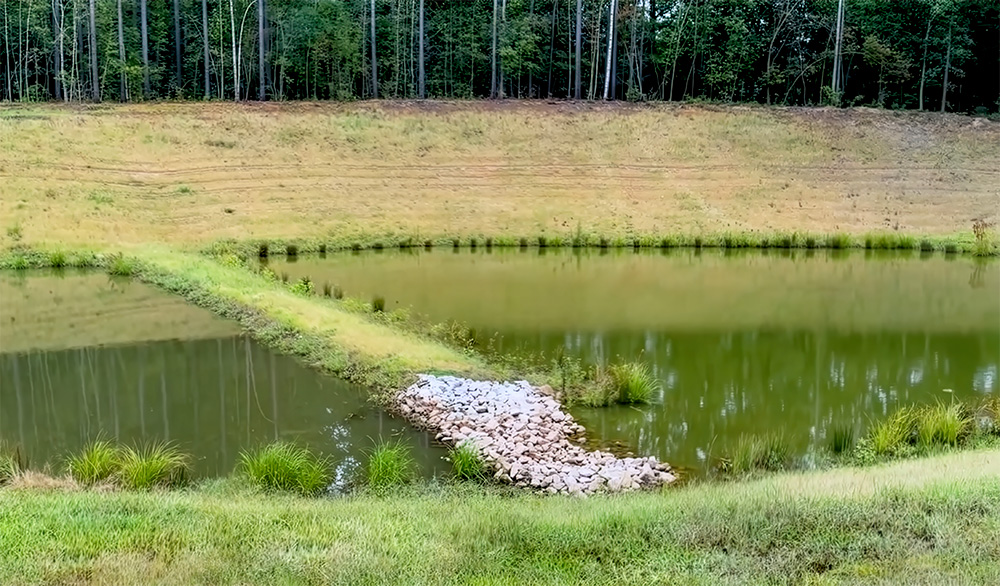
Is your pond or stormwater device ready for summer?
A dry spring has caused algae and nuisance vegetation to grow at an aggressive rate. Left unchecked, these blooms can quickly impact water quality, property aesthetics, and overall ecosystem health.
In the video below, a few our aquatics division team—Mitch, Brandon, and David—break down fresh, proactive approaches to vegetation control. Check it out now and learn how to stay ahead of the growth and ensure your property isn’t left in the weeds this summer.
Is your lake or pond in need of treatment? We can help at any stage of nuisance vegetation growth. Contact us today.
Video Transcript
Hey everybody! Spring is here, but the rain is not. What does that mean in the stormwater world? It means that algae and nuisance aquatic vegetation is growing aggressively.
As we know, stormwater devices are designed to collect and store nutrients such as phosphorus and nitrogen. These nutrients provide the food to fuel algae growth.
Every time someone over fertilizes their lawn, or heavy rain carries yard waste into a storm drain, it ends up here in your stormwater device—creating an environment for algae to thrive. Stormwater maintenance is an ever-evolving industry. Nutrient reduction is a new focal point of stormwater maintenance strategies.
Proactive approaches help reduce nutrients in stormwater devices, therefore helping to reduce the potential for algae growth. This is why it’s incredibly important to make sure your landscape professional and stormwater professional are working together to reduce the influx of unwanted nutrients into your water. A thin layer of green film or small mat of algae might seem harmless, but it can pose a severe threat to a pond’s ecosystem and overall health.
Throughout the day, algae actually produces oxygen through photosynthesis, which sounds great, right? However, at night, the real dangers occur when the algae blooms die off and start to decompose. The decomposition process rapidly depletes the water’s dissolved oxygen, which can cause a phenomenon known as oxygen crash. Without oxygen, fish and beneficial bacteria can quickly suffocate, making algae crashes the primary cause of sudden massive fish kills.
Managing the vegetation on your pond or stormwater device doesn’t mean waiting for the pond to turn completely green and then dumping in a bunch of algicides and herbicides. That’s a reactive approach. It’s expensive and it only fixes your symptoms, not the problems.
Effective aquatic vegetation management starts with preventative care. We want to look at the root cause of your issues and why are you seeing the vegetation you are. Once we have that determined, we can develop an integrated pest management plan that’s tailored to your pond’s specific needs.
This type of management plan can include many tools in the toolbox, including EPA-approved herbicides and algicides, beneficial bacteria to help consume excess nutrients, and installing aeration or fountain systems to keep the water moving and increasing your overall dissolved oxygen. Increasing oxygen creates more aerobic bacteria, which can also help consume excess nutrients.
Preventative maintenance is all about creating constant proactive care for your aquatic system, and I can assure you in the long run it’s much cheaper than playing catch-up.