
Why commercial properties are rethinking the spaces between buildings
Across office campuses, the spaces between buildings are taking on a more active role. Landscaped courtyards, walking paths and shared outdoor areas are increasingly considered alongside fitness centers, meeting facilities and other amenities that shape the working day. For owners and property managers, the opportunity is not simply to create more outdoor space, but to make existing environments more useful, comfortable and relevant to the people who occupy them.
The Workplace Extends Beyond The Building
The shift reflects changing expectations of the office itself. CBRE’s 2026 Americas Office Occupier Sentiment Survey found that 77% of respondents cited colleague engagement as a reason employees come into the office, while 53% identified insufficient amenities as a barrier. Improving the employee experience was a priority for 62% of surveyed organizations. These findings address the workplace as a whole, but they offer useful context for evaluating the common spaces that connect buildings and bring tenants together.
An outdoor space can extend that experience in practical ways. A shaded courtyard may accommodate an informal conversation. A walking trail can provide a break between meetings. A well-positioned seating area can turn a previously overlooked landscape into a place people return to throughout the week. The value of these spaces depends less on their scale than on whether they are accessible, comfortable and consistently maintained.
Toringdon: A Current Example of Workplace Investment
At Toringdon Office Park in Charlotte, leasing activity in 2026 provides a timely example of how established campuses continue to compete. Trinity Partners completed five new leases and two renewals totaling 32,146 square feet between January and April. By June, the seven-building property was 85.5% leased, according to the Charlotte Business Journal. New commitments included Daniels Company, Mark Spain Realty, TruNorth, Daramic and ResourceWise. These transactions reflect demand for a well-located Class A office environment at a time when employers are weighing the quality of the workplace alongside conventional building requirements.
The property’s offering extends beyond its office suites. Trinity Capital Advisors and Trinity Partners describe a campus with a fitness center, a landscaped pocket park and Bloom, a tenant experience program featuring food trucks, fitness classes and community events. Their May 2026 leasing announcements point to the combined appeal of accessibility, amenities and the tenant experience. The recent transactions do not establish that any single improvement caused leasing gains, but they demonstrate why the complete workplace setting remains relevant to asset positioning.
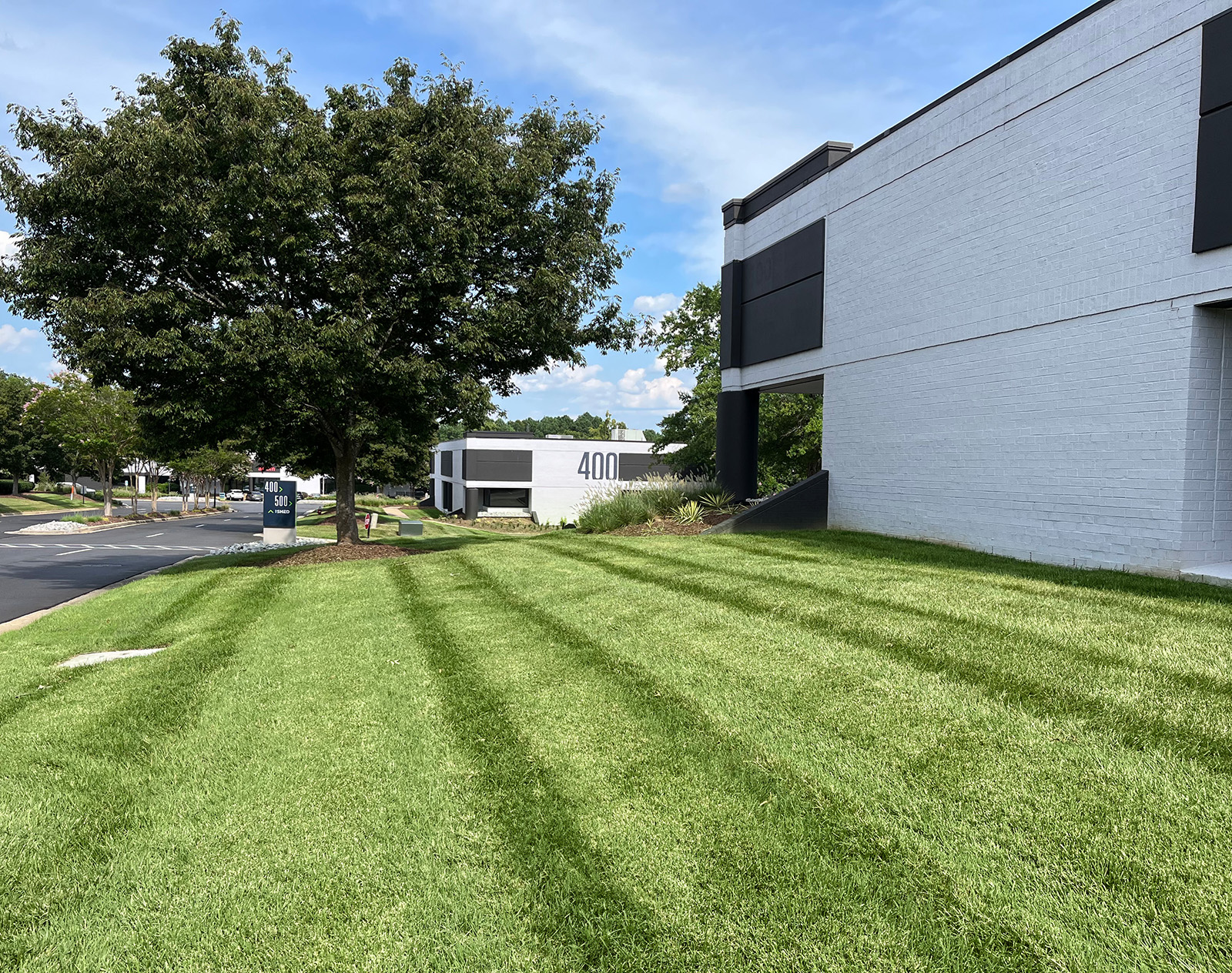
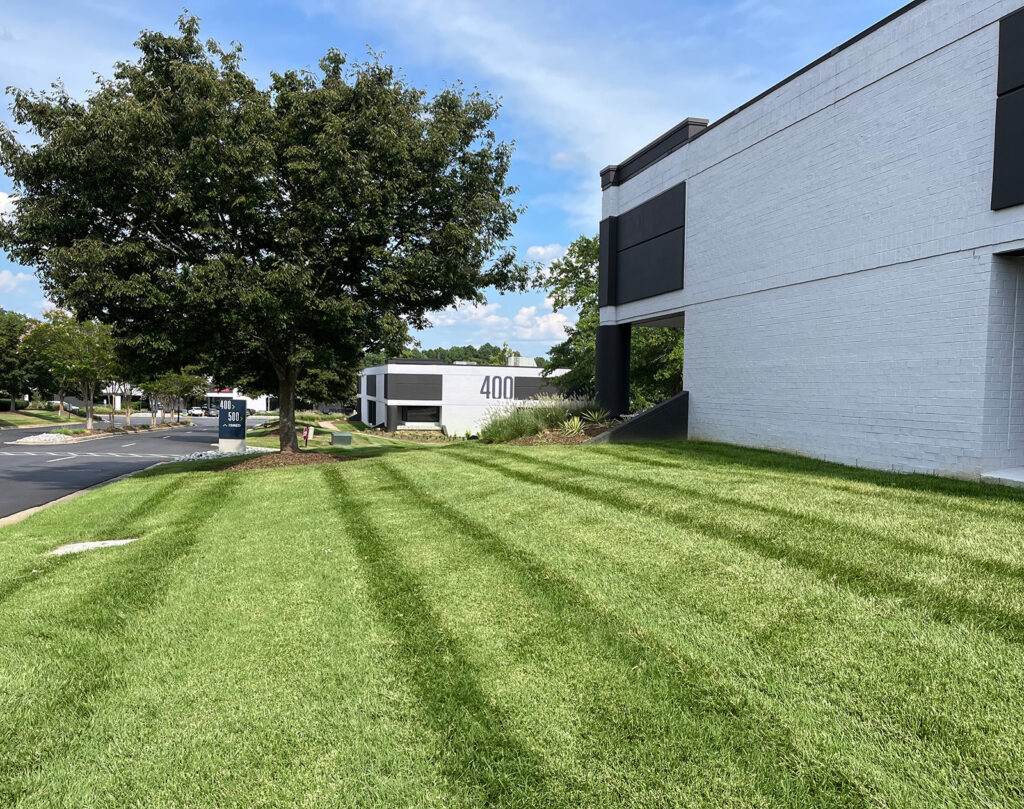
At Toringdon, our work includes seasonal floriculture, tree and plant health, and ongoing landscape maintenance. These services help maintain the condition of the campus throughout the year, including the outdoor areas tenants encounter between buildings and beyond scheduled events. For property managers considering 2027 investments, the lesson is practical: outdoor amenities depend on consistent care as much as initial design.
A Landscape That Supports The Working Day
Water Ridge Office Park, also in Charlotte, offers a complementary example. Its 11-building campus features more than three miles of walking trails, outdoor picnic areas, fitness amenities and tenant events. These are not simply visual features of the property. They provide alternatives for how people move through and spend time at work, from a short walk to an outdoor lunch. Our teams also work at Water Ridge, helping maintain the landscape setting that surrounds these shared spaces.
For property teams, these examples suggest that the effectiveness of an outdoor environment depends on both its physical design and how it is managed. A courtyard without shade may be underused in summer. A trail that is difficult to access may offer little practical benefit. Conversely, a modest gathering space that is comfortable, well maintained and occasionally programmed may become a meaningful part of the tenant experience.
Investment Should Follow The Property
Not every commercial campus needs the same approach. At Flagler Center in Jacksonville, owner Savlan Capital announced completion of a $7 million improvement program in September 2026, including common-area amenities, signage and refreshed landscaping. We also provide landscape services at Flagler Center. Although our documented work should not be confused with the owner’s broader renovation program, the investment illustrates how exterior presentation can be considered alongside other property improvements.
At Green Valley Office Park in Greensboro, our work reflects a different scale of investment: consistent landscape maintenance supported by targeted enhancements throughout the year. For established properties, that measured approach can be equally relevant. Refreshing plantings, improving shade, addressing irrigation performance and protecting mature trees may strengthen the usefulness and character of a campus without requiring comprehensive redevelopment.
The most effective decisions begin with the property itself. Managers can consider where people already gather, which routes connect buildings, how spaces perform in summer heat or heavy rain, and whether maintenance requirements are sustainable. Tenant feedback, outdoor-space usage, irrigation performance and ongoing replacement costs can help distinguish improvements with lasting value from those that serve primarily a short-term visual purpose.
Understanding The Property Beyond The Landscape
As commercial offices continue to compete on workplace quality, exterior environments deserve consideration as part of the overall tenant experience. Toringdon illustrates how landscape, amenities and programming can work together. Water Ridge demonstrates the role of walking routes and shared outdoor areas. For property managers, the objective is not to turn every courtyard into a destination, but to understand where outdoor spaces can serve the people who use them.
That understanding also shapes how we approach our work. Maintaining a landscape is only one part of supporting a commercial property. We need to understand the buildings and campuses we care for, the properties we are evaluating, and the expectations facing their owners and management teams. Following changes in the office market, tenant priorities and property investment helps us ask better questions and offer recommendations grounded in the way each site operates.
Whether we are maintaining an established campus, assessing a prospective property or planning the next phase of enhancements, the same principle applies: improvements should answer a real need and make responsible use of the available budget. Our role is to help property teams identify priorities, weigh long-term maintenance requirements and invest where the landscape can make a practical difference.