
When shrubs become overgrown, woody, or difficult to manage through routine pruning, a more significant approach may be needed. Rejuvenation pruning is an additional service used selectively to restore suitable plants. Our team evaluates each shrub to determine whether the treatment, timing, and expected recovery are appropriate for the property.
When is Rejuvenation Pruning Beneficial?
- The shrub is too large for its location or repeatedly obstructs windows, signs, sidewalks or sightlines.
- The plant is woody, leggy, bare near the bottom or dense outside but thin inside.
- Years of surface shearing have created an unhealthy or unbalanced structure.
- Routine seasonal pruning no longer controls the plant effectively.
- The shrub is otherwise healthy enough to produce new growth and recover.
Is Every Overgrown Shrub a Candidate?
No. Hollies and loropetalum often respond well, while older junipers or severely stressed shrubs may recover poorly. Each plant is evaluated before rejuvenation is recommended.
What We Evaluate
Plant
- Species and natural growth habit.
- Flowering cycle and ability to regrow from older wood.
Condition
- Overall health, age, root zone, irrigation, and environmental stress.
- Likelihood of successful recovery.
Property
- Visibility during recovery, surrounding landscape, and client expectations.
- One-time, phased, or replacement strategy.
When It’s Performed
There is no single timing window for every plant. For many healthy broadleaf shrubs, significant rejuvenation is considered near the beginning of the spring growth cycle so the plant can direct stored energy into new shoots. Spring-flowering shrubs may be addressed after flowering when preserving that seasonʼs bloom is important.
What to Expect
- Before: Overgrown, woody, uneven or out of scale with the location.
- Immediately After: Bare, open, smaller or dramatically reduced. This temporary appearance is expected.
- Healthy Recovery: New shoots develop over time. Follow-up pruning may guide a fuller, more manageable form.
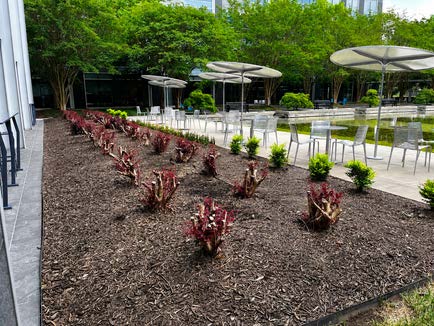
Immediately After Pruning
Selective cuts remove older wood to open the canopy.
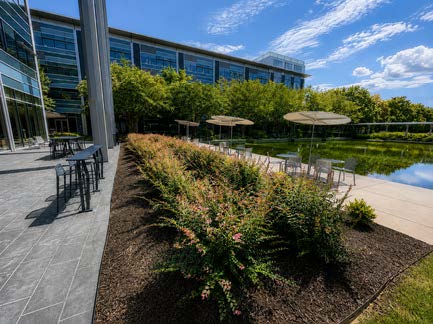
Healthy Regrowth
Healthier, more attractive plant with improved growth and curb appeal.
When Is Replacement The Better Solution?
Rejuvenation cannot correct every problem shrub. Replacement may provide better long-term value when the mature plant is naturally too large for the space, the shrub is unhealthy or declining, the species does not reliably regenerate from old wood, or repeated heavy pruning would be required to force the plant into a suitable size.
The Bland Difference
Our role is to advise—not automatically recommend the most aggressive cut. We identify which plants are suitable, which should be pruned selectively or in phases, which should be left alone, and when replacement is the more sustainable investment.
We do not recommend a dramatic cut simply because a shrub is overgrown. We recommend the solution most likely to protect the health, appearance, and long-term value of the property.

Think your property could benefit from rejuvenation pruning? Reach out to your local Account Manager today, or get started with a quote.