
Pruning is an important part of maintaining a healthy, attractive landscape, but the right timing is different for each plant and property. Understanding seasonal growth, flowering cycles and site conditions helps explain why shrubs may not be pruned as soon as new growth appears—and why every plant is not cut during every scheduled visit.
What Does Routine Pruning Accomplish?
- Maintain an appropriate shape, scale and relationship to the surrounding landscape.
- Support fuller, balanced growth and protect flowering with proper timing.
- Remove dead, damaged, crossing, or poorly positioned growth.
- Keep signs, lights, windows, entrances, sidewalks and sightlines clear.
- Reduce crowding and help protect the propertyʼs long-term appearance and value.
Why Can Shrubs Look Full Before Pruning Begins?
Spring often produces the strongest flush of new growth. At the same time, many flowering shrubs are still blooming or completing their bloom cycle. Pruning too early can remove flowers or developing buds, interrupt the plantʼs natural cycle, or trigger additional regrowth without solving an underlying size problem.
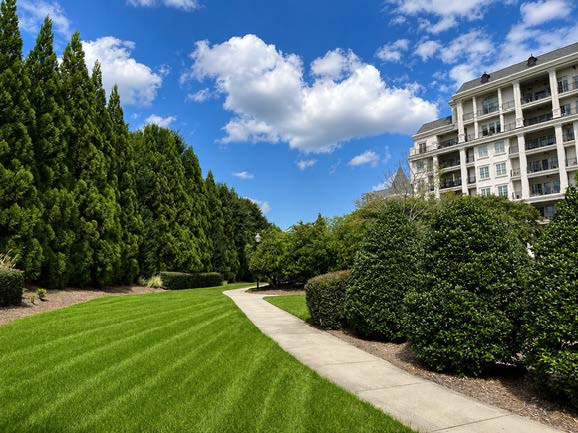
An example of maintenance pruning during active growth season.
How We Approach Pruning Through The Seasons
After Spring Flowering
- Allow flowering shrubs to complete their bloom cycle.
- Address the first major growth flush.
- Restore shape and important clearance.
- Identify shrubs outgrowing their location.
Active Growing Season
- Maintain fast-growing evergreens and formal hedges as needed.
- Use selective pruning where a natural form is intended.
- Adjust for heat, drought, and plant stress.
- Leave plants untouched when another cut adds no value.
Late-Season Touch-Up
- Use light tip pruning where appropriate.
- Address isolated appearance or clearance concerns.
- Avoid unnecessary heavy reductions.
- Protect developing spring flowers and tender growth.
What If The Shrub Is Still Too Large?
Routine pruning manages seasonal growth and maintains an established form. It may not correct a shrub that is permanently too tall, too wide, woody, bare underneath or out of scale with its location. In that situation, rejuvenation pruning—or replacement with a better-suited plant—may be the more responsible long-term solution.
What to Expect
- Not every shrub is cut at every visit. A contract with multiple pruning cycles provides multiple opportunities to evaluate the landscape—not a requirement to cut every shrub each time.
- Different plants may look different. Flowering shrubs, natural-form plants, fast-growing evergreens and formal hedges should not follow identical schedules.
- Selective pruning may look more open at first. Opening dense growth can improve light and airflow and encourage healthier interior growth.
- Weather and plant health matter. Heat, drought, disease, irrigation and other stress can change the safest and most beneficial approach.
- Some seasonal fullness is normal. A plant may temporarily extend beyond its maintained form while flowering or producing new growth.
- Healthy results may take time. Pruning supports long-term plant health and appearance. Some shrubs need time and new growth before the full benefit becomes visible.
The Bland Difference
We consider the whole property and aim to balance appearance, health, visibility, access and safety. Decisions are coordinated across the landscape—not one shrub at a time.

50 Years of Experience. A Commitment That Lasts.
Think your property could benefit from seasonal pruning? Reach out to your local Account Manager today, or get started with a quote.